
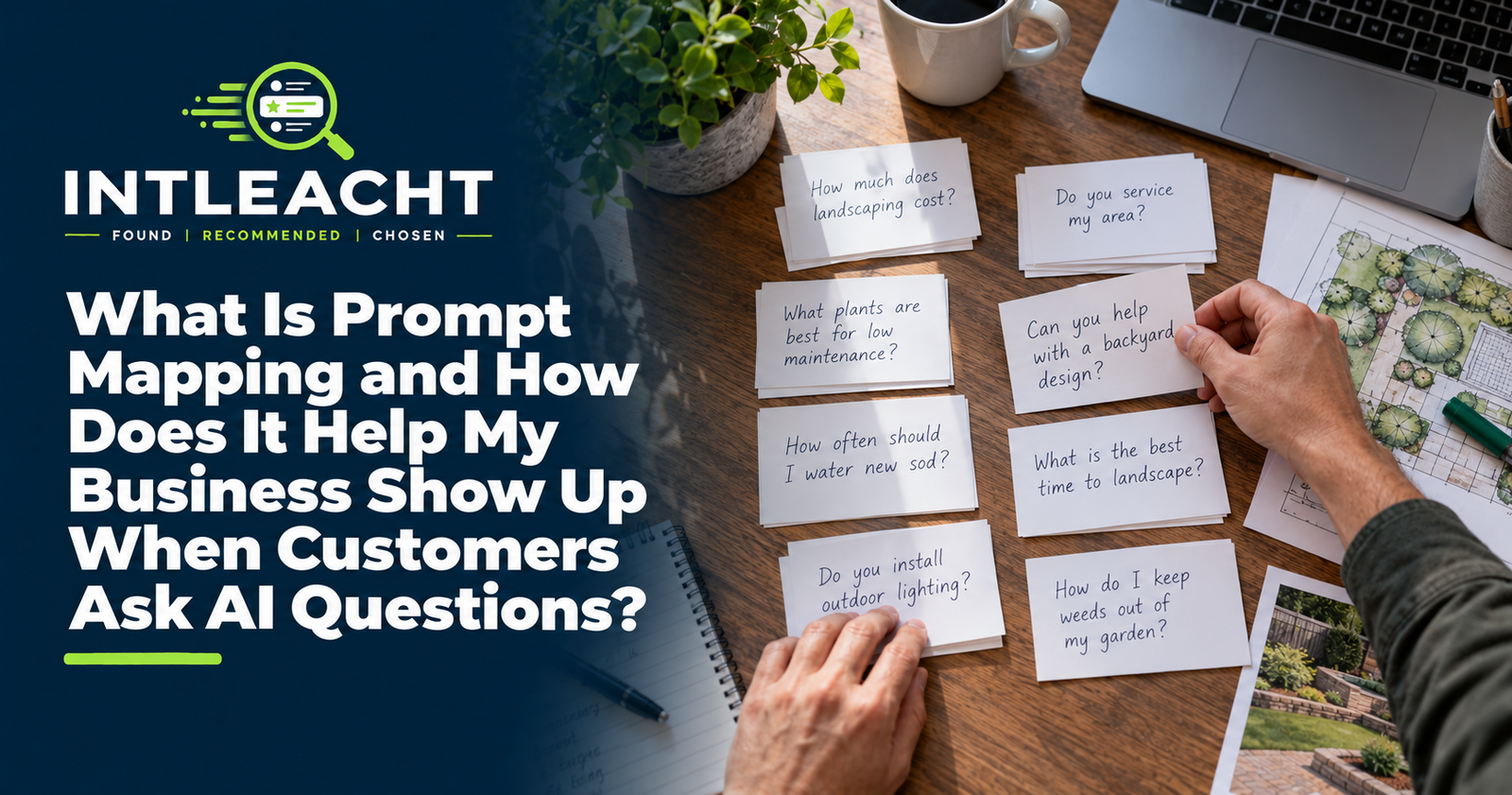
Prompt mapping is the process of identifying every question your ideal customer might type into ChatGPT or Perplexity, then creating structured content that directly answers each one — so your business becomes the source AI pulls from instead of your competitors.
Why Understanding the Customer’s AI Query Is Everything
When a customer uses an AI platform to find a service provider, they do not type keywords — they ask questions in natural language. “Who is the best roofing company near me?”, “What should I look for when hiring an HVAC contractor?”, “How much does a one-bedroom move cost in Austin?” These natural-language questions are fundamentally different from the keyword-based queries that traditional SEO has trained businesses to optimise for, and they require a completely different content strategy to win.
The mistake most service businesses make is creating content around what they want to say — their process, team, and awards — rather than around what customers are actually asking AI. AI platforms do not look for the most impressive service description. They look for the most direct and useful answer to the specific question submitted. A business whose content library is built around customer questions will consistently outperform competitors who write primarily for their own brand agenda, regardless of which business has the more impressive website.
How to Build a Prompt Map for Your Service Business
Start by listing every service your business offers. Then, for each service, brainstorm customer questions at five intent levels: awareness questions (what is this problem?), education questions (what are my options?), evaluation questions (how do I choose the right provider?), comparison questions (what makes a good provider?), and action questions (who should I call?). Each intersection of a service with an intent level becomes a content target — a specific piece of content your website needs to address.
Layer location into your prompt map. AI platforms are increasingly used for location-specific queries, and “who is the best plumber in Dallas?” requires location-specific content to answer effectively. If you serve multiple cities or service areas, each location needs its own layer of prompt mapping. Real customer language is the most valuable raw material: the questions customers ask on sales calls, the language in your Google reviews, and the threads in online forums about your service category are exactly what people type into AI platforms.
Turning Your Prompt Map Into a Content Strategy
A completed prompt map is a content production brief. Each prompt becomes a page title or blog post title, written exactly as a customer would phrase it. Each page opens with a direct answer to that prompt, expands on related considerations in the body, and closes with a FAQ section addressing adjacent questions. Prioritise by commercial value and query intent — start with the highest-intent action questions where a customer asking is essentially ready to book, and work backward through evaluation and education questions as your content library grows. How to write content that AI platforms will actually pull from and cite gives you the writing framework that turns prompt map entries into published content AI platforms trust enough to cite.
Prompt mapping is not a one-time exercise. New questions emerge as AI platforms evolve, as your service offering expands, and as customer behaviour shifts. The businesses that maintain consistent AI visibility treat prompt mapping as an ongoing process — reviewing and extending their prompt library quarterly and publishing new content against the prompts that represent the highest opportunity at each review cycle. How to make your service pages readable to AI so they get cited instead of ignored is the next step after prompt mapping — translating your content strategy into service page structures that AI crawlers can read, trust, and incorporate into their recommendation responses.
Frequently Asked Questions
How many prompts should I map for my service business?
For most service businesses, a thorough prompt map includes between 40 and 100 questions across all service lines and locations. Prioritise the highest-intent action questions first and build out through the other intent levels over time — you do not need to create all the content at once.
Can I use keyword research tools to build a prompt map?
Keyword tools are a useful starting point but they reflect what people type into Google, not the natural-language questions customers ask AI. Supplement keyword data with actual questions from sales calls, customer reviews, and service-category forums to build a prompt map that accurately reflects AI query language.
Is prompt mapping the same as FAQ content strategy?
They overlap but are not identical. FAQ content answers specific questions, which is a core output of prompt mapping. But prompt mapping also informs how service pages are structured, what blog content gets prioritised, and how your business description appears across directories — it is the planning layer that determines your entire content programme.
Does prompt mapping work for businesses with multiple service locations?
Yes — and location-specific prompt mapping is one of the most powerful AI visibility strategies for multi-location businesses. Creating content that answers city-specific questions helps AI platforms understand which areas you serve and recommend you for location-based queries in each service area.
How do I know if my prompt mapping strategy is working?
Test it directly by asking ChatGPT and Perplexity the questions from your prompt map. If your business is being named or your content is being cited in the responses, the strategy is working. Regular AI platform auditing — testing target prompts weekly or monthly — is how you track progress and identify remaining content gaps.